


Blogs
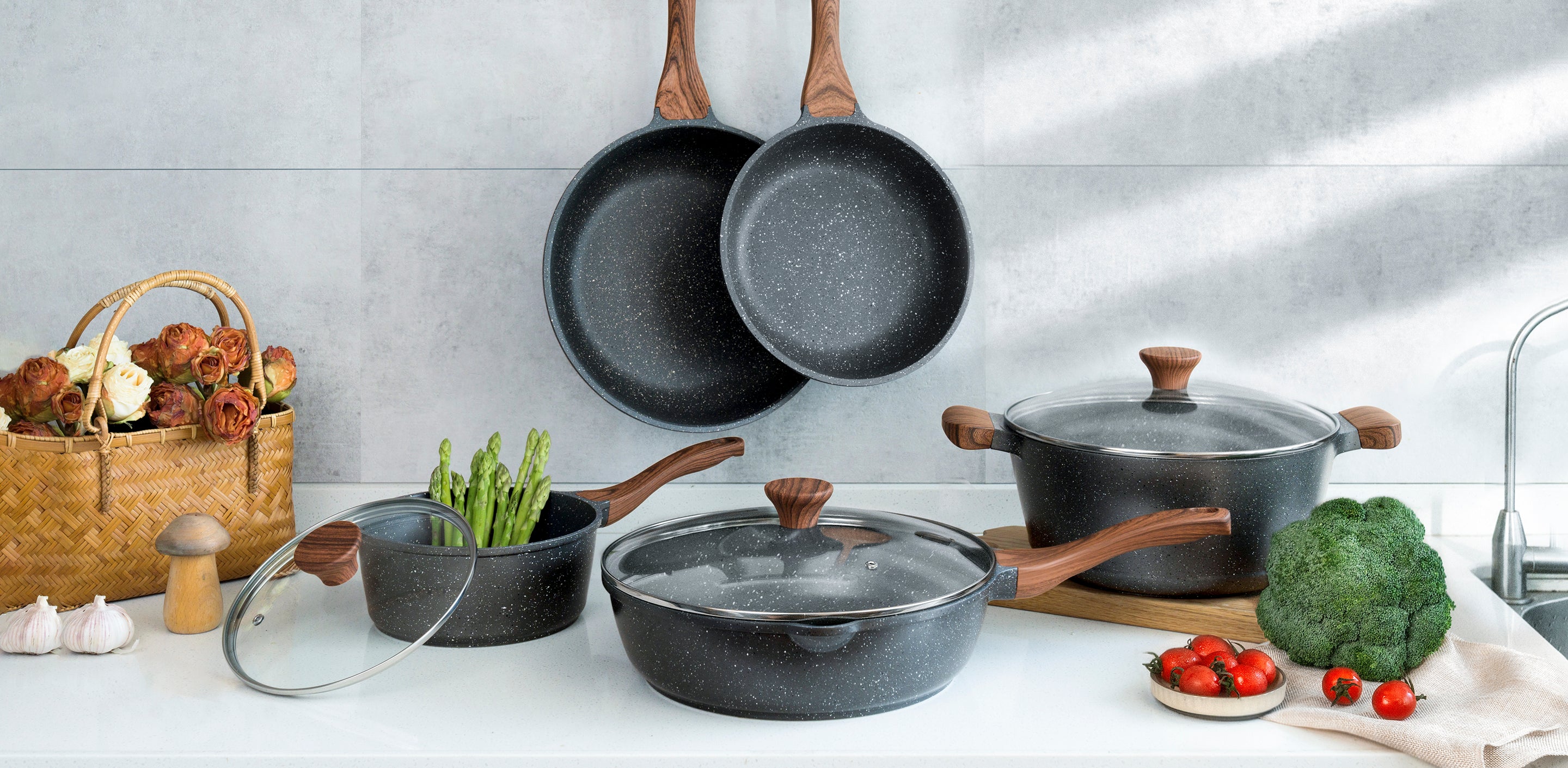

Nonstick vs Stainless Steel Pans
Knowledge of Stainless Steel Pans The stainless steel pot is your kitchen workhorse. Look for a multi-layer pan with an aluminum or copper core. Aluminum and copper are heat conductors, and these materials are then coated with stainless steel, which gives the pan a nice non-reactive surface. Like its nonstick sibling, you need a pan with a heavier bottom for maximum, even heat transfer. Thin, lightweight pans are more prone to hot spots and dents more easily. When to Use Stainless Steel Pans You can cook almost anything in a stainless steel pan. They can be more difficult to clean, but if you use enough heat and fat, most foods won't stick to the pan because they'll sear, creating a crust that will release from the bottom. Foods that require higher heat aren't the only items you can trust with the stainless steel pan: Acidic foods, metal utensils, and nonstick sprays are also welcome. Plus, these pans can withstand higher heat on the stove and oven, making them ideal for menu items that require a high sears and oven finish, like steak, chicken, pork, and braises. If you're cooking like a small whole chicken, you can even use the larger version as a roaster. When cleaning a stainless steel pan, you need to wait for the pan to cool down to avoid deformation or damage to the pan. We do not recommend putting stainless steel pans in the dishwasher. When cleaning, soaking might get you sorted if something is more difficult to remove, but if not, try some scrubs. Choose the Right Pan The main thing to keep in mind when using these pans is that they will work for you, but in order to do so, you must choose the right one for the dish you are making. Using the right equipment will not only make it last longer, it will also make you a better cook. So turn the heat down and make some crepes, or turn it up a little bit and grill your favorite protein or veggies to a deep golden brown. Lastly, hand wash the pans whenever possible.
Learn more
Nonstick vs Stainless Steel Pans
When you're shopping for cookware, whether you plan to stock your kitchen for the first time or buy something for a specific dish, the goals are efficiency and longevity. You need to buy the right equipment for the right job and make a concerted effort to use the tool the way it is intended. Therefore when shopping for a frying pan, should you buy a nonstick or stainless steel pan? If you're a regular cook, the short answer is that you need both. Knowledge of Nonstick Pans The core of a nonstick pan is usually made of aluminum and then coated with a nonstick material (PFOA-free Teflon or ceramic). A light, weightless pan might look ideal, but when choosing any pot or pan, you need a thicker, heavier bottom to distribute the heat evenly. Ideally the nonstick pan is oven proof and has an oven friendly coated handle. It's not necessary, but it comes in handy when you want to make baked egg dishes like omelettes. If you do get an oven-safe pan, you'll want to check how much heat the pan can handle. Exceeding this number could damage the pan and the food being cooked. When To Use Nonstick Pans Now that you know how to buy nonstick pans, let's talk about how you'll use them and take care of them. For starters, calorie reduction is the name of the game for the reasons above. Nonstick pans are able to do what they do because of their nonstick coating, and nonstick coatings can be affected by overheating. Stick to more delicate foods such as eggs, crepes, pancakes, and very delicate fish, which can be cooked on medium and low heat. Never sear in a nonstick pan. Searing requires high heat, and nonstick pans cannot be used with high heat. Also, you want to avoid acidic foods (like ketchup or wine) and nonstick cooking sprays. Acids can wear away the coating, and nonstick sprays can create residues that are hard to remove. Use oil or butter instead of nonstick spray. Next, a life rule worth repeating: Use wood, silicone, or rubber utensils on nonstick pans. And don't put nonstick pans in the dishwasher - they can't handle the heat of the dishwasher, even if the label tells you they can. The combination of heat and water is horrible for metals and, in this case, will destroy your coating. Lastly, I think it's important to remember to try as much as you can and never go over medium heat, or always remember to use certain utensils and avoid certain foods. Sometimes the nonstick is the only pan that is clean, sometimes all rubber spatulas are in the dishwasher, and sometimes you forget that you can't add a can of tomato sauce. Even with our best efforts, the coating on these pans will wear off. This is not anyone's failure, it is reality. If the food starts to stick, you can't stick with this nonstick pan any more. This pan has a quality that makes it worth your kitchen space. Once this quality doesn't work, it needs to be replaced. Don't scrape scrambled eggs with a wooden spoon for the next few years. To Be Continued…
Learn more
5 Mistakes to Avoid with Nonstick Cookware
Do Not Put Nonstick Cookware in Dishwasher When it comes to cleaning, hand washing is the best. The nonstick surface should make it a simple and easy process. Let the pans cool to room temperature before cleaning. This will ensure it doesn't deform due to temperature fluctuations. From there, use cool water and a sponge or soft brush with a few drops of dish soap to wash away any stubborn food. As long as your nonstick pans are in good shape, the process should be as simple as a quick wipe and rinse. Do Not Use Abrasive Cleaners or Metal Utensils It's tempting, but even if you promise to do your best not to scratch the pan during use, metal utensils are a surefire way to cause lasting damage to nonstick pans because they can easily scratch the coating surface. Abrasive cleaners and stacked pans can also scratch or the surface, so avoid these pitfalls too. If stacking is your only option, place a dish towel between each pan as a protective layer. Make Sure to Avoid Shocking Temperature Changes Few materials perform well from hot to cold or vice versa and nonstick cookware is no exception. As we mentioned above in the instructions for hand washing the pans after they have cooled, the practice of allowing the pans to come to a new temperature gradually will help avoid warping. The same can be said if you want to take your pans from the fridge to the stovetop. Let’s be honest, your pan shouldn’t have been in the fridge in the first place. Nonstick pans are not for food storage, especially when we're talking a big pot of marinade. As with cast iron, prolonged exposure to acidic components will wear down the finish. Do Not Dry Heating Your Nonstick Cookware Don't let your pan heat up without food or liquid. The pan can heat to an unsafe temperature in a few minutes or less, so having something in the pan will help keep the temperature steady and avoid spoilage and smoking. While we're on the topic, it's also not advisable to let your nonstick cookware get too hot regardless of what's in it. It's best to avoid heat levels that exceed the medium setting of your stovetop. High temperatures in the oven are also definitely not wise. For items that need a tasty crust, pull out your trusty cast iron for searing work. Do Not Use Cooking Sprays What makes the super smooth surface even more nonstick? Cooking spray, right? Definitely wrong. Lecithin, an ingredient in the spray, is the nemesis of nonstick coatings and will adhere to it even when you don't want it to. If you just want to give your nonstick pan a little extra kick by dusting it a little, a spray of oil will do the trick.
Learn more
Learn How to Chop an Onion
Many recipes begin with the simple task of chopping an onion, from soups to stir-fries or sauces to your favorite pastas, casseroles, and stews. Whether your recipe calls for wedges, slices, or cubes, get it right and you'll reduce the prep time and feel like a pro. What Do You Need There are a few essentials you need in order to properly chop onions. First of all, you need onions. The basic cutting techniques work with all types of onions, whether you need white, red or sweet onions. Next, you'll need a stable cutting board large enough to cut the onion. Then you need your knife or knives, that's all. We recommend using a chef's knife. Make sure yours is sharp as it will make this task and all other cutting techniques easier and safer. Also, you'll need a paring knife to peel the onion first. Get Started First of all, cut off the stem end of the onion and remove the onion skin by gripping between your thumb and the blade of a paring knife. How to Slice Cut the onion in half from the root. Use the tip of a knife to cut a wedge around the root and remove. Then, cut directly into the cutting board. When the onion is too narrow to stand upright, turn it over and finish slicing. How to Chop and Dice an Onion Start by cutting the onion in half from the root. Then, place one half flat side down. Slice lengthwise at even intervals, being careful not to cut through the root end. Next, slice horizontally toward the root end at even intervals. Finally, make vertical cuts and crosswise vertical cuts onto a cutting board to create even-sized pieces. To dice an onion, simply cut in wide intervals. How to Cut Onion Wedges Keeping the root intact, aim the knife toward the center of the onion and make a cut. A small piece of root in each wedge helps it stick together when cooked. If you want to know more cooking skills, please feel free to leave your comment in below area or email us directly at Support@Sensarte.com.
Learn more